
If you live in Kerala, you already know the feeling: hair that's frizzy by nine in the morning, a scalp that starts itching by afternoon, and flakes that show up no matter how often you wash. It's tempting to blame the shampoo. Often, though, the real culprit is the climate itself, and that means the fix usually needs to go a little further than switching bottles. Here's what actually happens to your scalp in Kerala's humidity, how to tell when it's more than a bad hair day, and what a proper scalp treatment can, and can't, do about it.
Why Kerala's Humidity Is Hard on Your Scalp, Not Just Your Hair
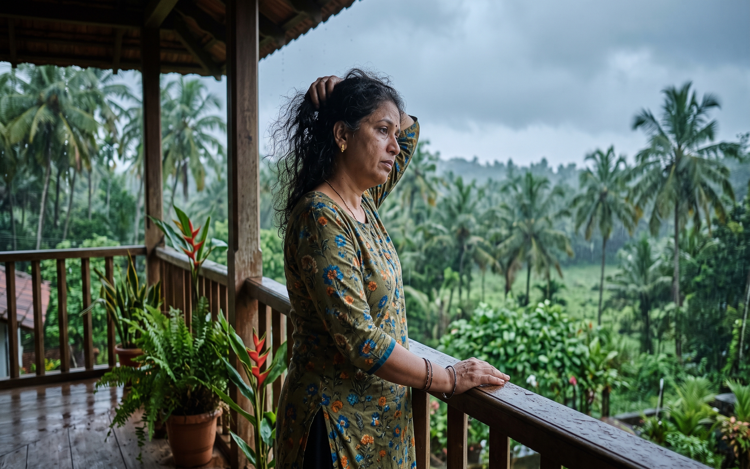
Humidity doesn't directly cause dandruff, but it creates conditions where common scalp problems can develop or get worse. Sustained heat and moisture prompt the scalp to produce more oil, and that extra sebum, combined with sweat and product buildup, gives Malassezia, a yeast that's a normal part of scalp flora, more to feed on. In some people that shows up as ordinary dandruff. In others it can edge into seborrheic dermatitis, a related but more inflamed condition that the American Academy of Dermatology describes in detail.
For a humid coastal climate like Kerala's, this pattern isn't really seasonal in the way it might be further north. It's closer to a year-round baseline that spikes hard during monsoon, which is part of why scalp complaints here tend to be more persistent, and why they're harder to shift with a shampoo swap alone.
"Just Sweaty" vs. an Actual Scalp Problem: How to Tell the Difference
A scalp that's simply reacting to heat and sweat usually calms down once hair is properly washed and dried. Everyday oiliness and mild itch that fade after a good wash are common and not, on their own, a sign of anything wrong. According to GoodRx's overview of dandruff causes, the picture looks different when flaking returns within a day or two of washing, when there's visible redness or irritation along the hairline and part, when itching doesn't ease after cleaning, or when oiliness reappears within hours rather than days.
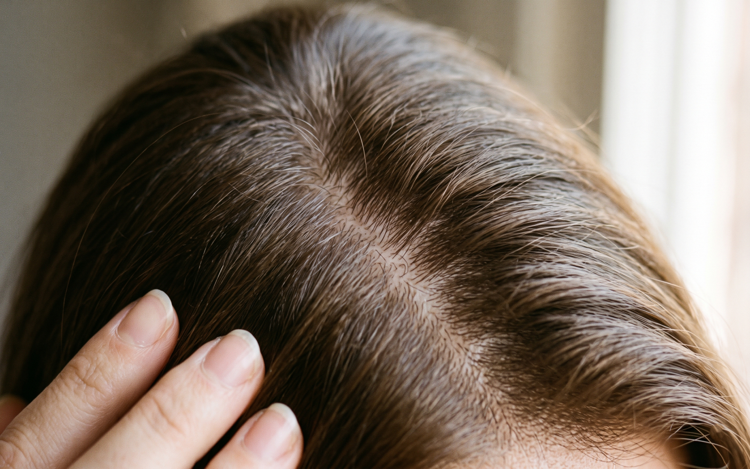
None of this is a substitute for an in-person look. A scalp that seems "just dry" can sometimes turn out to be something else, and a scalp that looks alarming can sometimes settle with the basics. That distinction is really what an initial consultation is for, and it's why we'd rather start with an assessment than a fixed protocol.
What a Guided Scalp Treatment Actually Involves
A scalp treatment at a clinic setting typically starts with an assessment: a practitioner looks at the scalp itself, asks about triggers, routine, and how long the issue has been going on, and uses that to shape the session rather than reaching for a one-size-fits-all product. From there, the approach is usually built around a few components. Cleansing that lifts oil and buildup without stripping the scalp further, since over-stripping can actually push the scalp to overproduce oil in response. Targeted serums or actives chosen to suit what's actually present, which may include soothing or antifungal-supportive ingredients depending on the assessment. A scalp massage as part of the session, mainly to support circulation and help products absorb, alongside the sensory benefit. And guidance on a home-care routine, because a single session in a humid climate rarely holds on its own; what happens between visits matters as much as the visit itself.
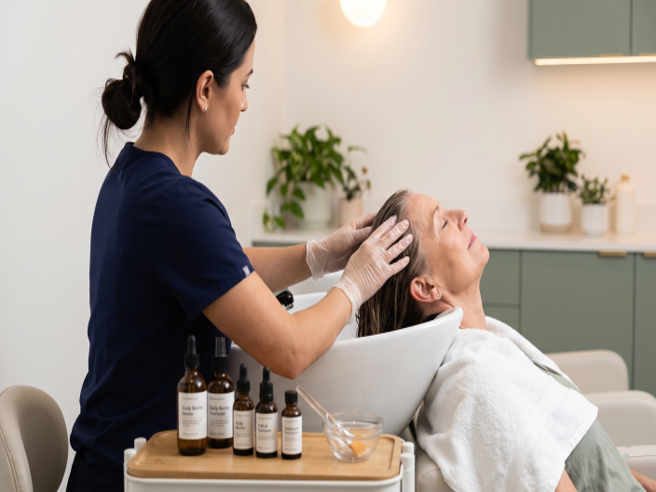
It's worth being upfront here: this is supportive care, not a guaranteed cure, and results vary from person to person. Anyone with a scalp condition that's persistent, painful, or spreading should still see a dermatologist for a proper diagnosis; a clinic scalp treatment is meant to sit alongside that kind of care, not replace it. You can see the full range of scalp and hair services we offer, and the same team handles both routine scalp care and more involved hair and skin concerns.
Need a closer look at what's going on with your scalp?
Book a consultation at Lumea Aesthetics →Why Scalp Comfort Also Matters for Your Hair
It's easy to treat scalp flaking or itch as a purely cosmetic annoyance, but the scalp is where every strand starts. Chronic irritation, inflammation, or scratching can, in some cases, contribute to more noticeable hair shedding or slower-feeling regrowth over time, even when the scalp condition itself isn't severe. That doesn't mean every humid-weather flake is a hair-loss warning sign; most aren't. It's simply another reason a scalp that's been bothering you for weeks or months is worth addressing properly rather than managing around indefinitely.
Simple Habits That Help Between Sessions
A treatment session helps most when the routine around it doesn't work against it. A few habits that tend to make a real difference in humid weather:
- Rinse and dry hair thoroughly after getting caught in rain or after a heavy sweat, rather than letting it air-dry slowly under a scarf or helmet.
- Choose a gentler, less stripping shampoo formula over aggressive daily washing, since over-washing can trigger more oil production, not less.
- Avoid layering multiple heavy styling products during the wettest months, since product buildup mixed with humidity is one of the more common triggers we see.
- Keep combs, brushes, and pillowcases reasonably clean, since these hold onto oil and skin cells that can reintroduce buildup after a wash.
These are general habits rather than a treatment plan in themselves, and they won't resolve an underlying scalp condition on their own. They're worth doing either way, alongside professional care if you need it.
Frequently Asked Questions
The takeaway
Kerala's humidity isn't going anywhere, but a scalp that flakes, itches, or feels heavy by mid-afternoon doesn't have to be the default either. If you've been dealing with this for a while, our team at Lumea Aesthetics can take a proper look and build a plan around what your scalp actually needs, not a generic routine.
You can also browse our hair and skin blog for more on related concerns like hair fall and dandruff care in Kerala's climate.
Ready to talk through your scalp concern?
Get in touch with Lumea Aesthetics →